Elevate Your Expertise: Specialized Spa Therapies for Advanced Career Growth
Elevate Your Expertise: Specialized Spa Therapies for Advanced Career Growth
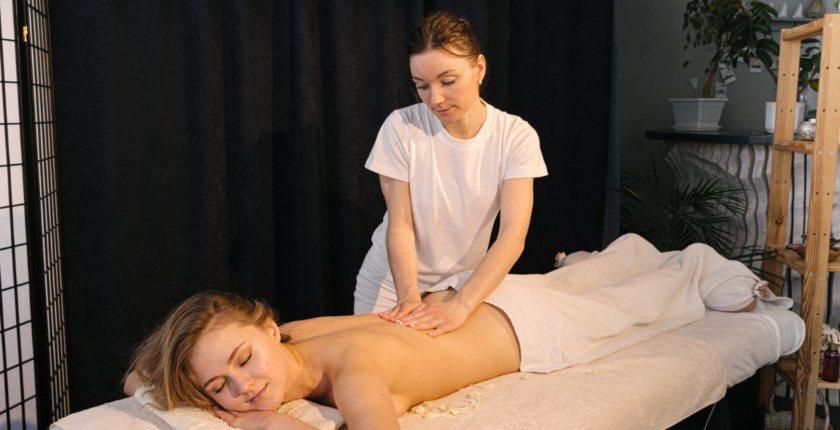
The concept is to delve into advanced and specialized treatments beyond the basics, thereby acquiring a unique skill set that can distinguish them in the competitive spa industry. By expanding their expertise, individuals can attract a broader clientele, command higher positions, or even consider entrepreneurship with a focus on exclusive and in-demand spa services.
Delving into specialized spa therapies not only enhances your technical proficiency but also positions you as a sought-after expert in the field. These advanced skills can open doors to niche markets, allowing you to cater to specific client needs and preferences. By staying at the forefront of industry trends and continuously refining your craft, you not only elevate your professional standing but also contribute to the innovation and evolution of the spa experience. This commitment to specialization is a strategic investment in your career, paving the way for both personal fulfillment and substantial growth within the dynamic spa landscape.
How to Elevate Your Expertise on spa
1. Continuous Learning: Stay updated on the latest spa trends, techniques, and technologies through workshops, courses, and industry conferences.
2. Specialized Training: Pursue additional certifications or training in specific spa therapies, such as aromatherapy, advanced massage techniques, or holistic wellness practices.
3. Mentorship and Networking: Connect with experienced professionals in the spa industry to gain insights, advice, and mentorship. Networking can open doors to valuable opportunities.
4. Hands-On Experience: Actively seek opportunities to apply your knowledge and skills. Consider internships, apprenticeships, or volunteer work to gain practical experience.
5. Client Feedback: Use client feedback as a tool for improvement. Understand client preferences and tailor your approach to provide a personalized and exceptional spa experience.
6. Embrace Technology: Stay abreast of technological advancements in the spa industry, whether it’s related to treatment equipment, booking systems, or digital marketing strategies.
7. Cultivate Holistic Wellness: Develop a holistic approach to wellness by integrating practices like mindfulness, nutrition, and fitness into your spa offerings. Understand the interconnectedness of mind and body.
8. Build a Personal Brand: Showcase your expertise through a professional online presence, whether it’s a portfolio, website, or active engagement on social media platforms.
9. Seek Feedback from Peers: Collaborate with fellow spa professionals to exchange ideas, receive constructive criticism, and collectively elevate the standard of care within the industry.
10. Attend Workshops and Seminars: Participate in workshops and seminars conducted by industry leaders. These events can provide valuable insights, hands-on training, and opportunities to connect with experts in the field.
Benefits of Elevate Your Expertise on spa
1. Career Advancement: Elevating your expertise in the spa industry opens doors to higher-level positions, managerial roles, or even entrepreneurship, providing avenues for career progression.
2. Increased Clientele: Specialized skills attract a niche clientele seeking specific spa treatments, expanding your customer base and establishing you as an expert in your chosen field.
3. Competitive Edge: In a saturated market, advanced expertise sets you apart, giving you a competitive advantage over others in the industry and making you a go-to professional for specialized spa services.
4. Higher Earning Potential: With advanced skills and a unique service offering, you can command higher rates for your services, leading to increased income and financial rewards.
5. Professional Recognition: Elevating your expertise garners recognition from peers, industry leaders, and clients, contributing to your professional reputation and credibility.
6. Job Satisfaction: Mastering specialized spa therapies can bring a deeper sense of satisfaction and fulfillment as you provide more meaningful and effective treatments to your clients.
7. Industry Contribution: By staying at the forefront of industry trends and advancements, you contribute to the growth and innovation of the spa sector, positioning yourself as a valuable asset to the broader industry community.
8. Personal Growth: Continuous learning and skill development contribute to personal growth, enhancing your confidence, self-esteem, and overall well-being.
9. Adaptability to Trends: Being knowledgeable about the latest trends and technologies in the spa industry ensures you are adaptable and can seamlessly integrate new approaches into your practice.
10. Client Loyalty: Offering specialized spa services fosters client loyalty, as individuals appreciate the unique and tailored experiences you provide, encouraging repeat business and positive word-of-mouth referrals.
2026 SEO update: Elevate Your Expertise: Specialized Spa Therapies for Advanced Career Growth
Updated for 2026, this guide on Elevate Your Expertise: Specialized Spa Therapies for Advanced Career Growth should be read against a faster-moving wellness market. Recent industry data shows that skills-based hiring is becoming central to quality hiring and talent gap management, while related research notes that tourism businesses continue to face labour shortages, skills gaps and retention pressure. For spa owners, hotel wellness directors and recruitment teams, that means the topic is no longer just an editorial trend; it affects hiring, training, client trust, pricing and how people choose premium wellness experiences in Thailand and beyond. The practical takeaway is to connect the article’s original advice with sharper evidence: define the skill or service clearly, explain how it improves guest outcomes, and make the next step easy through spa and wellness recruitment support, browse qualified wellness candidates and Wellness Salary Guide 2026. Thailand is also receiving more wellness attention, with current tourism and wellness news showing that the global wellness economy reached $6.8 trillion in 2024 and is projected to keep growing toward 2029. A stronger SEO-friendly version of this article therefore needs useful internal links, credible references, and clear answers to the questions readers are likely to search before they apply, hire, book or compare options.
HiSoLife internal update
HiSoLife update: employers can now move from reading about spa recruitment and workforce planning directly into action. Use browse qualified wellness candidates to review talent, post a spa or wellness job to publish a role, and Wellness Salary Guide 2026 to benchmark compensation before making an offer. This internal pathway is important for SEO because it connects informational content with commercial intent: a reader who searched for hiring advice can continue to a relevant employer page instead of leaving the site.
Related HiSoLife resources
- spa and wellness recruitment support
- browse qualified wellness candidates
- post a spa or wellness job
- Wellness Salary Guide 2026
- browse spa and wellness jobs
References and further reading
- LinkedIn, Future of Recruiting 2025 — skills-based hiring is becoming central to quality hiring and talent gap management.
- OECD, strengthening the tourism workforce — tourism businesses continue to face labour shortages, skills gaps and retention pressure.
- Global Wellness Institute, 2025 Global Wellness Economy Monitor — the global wellness economy reached $6.8 trillion in 2024 and is projected to keep growing toward 2029.
- U.S. Bureau of Labor Statistics, Massage Therapists outlook — massage therapist employment is projected to grow 15 percent from 2024 to 2034.
Mini FAQ: Elevate Your Expertise: Specialized Spa Therapies for Advanced Career Growth
What should employers update first for spa recruitment and workforce planning in 2026?
The first update is to turn spa recruitment and workforce planning from a broad idea into a clear decision framework. For this article, that means reading Elevate Your Expertise: Specialized Spa Therapies for Advanced Career Growth as practical guidance for what a reader should do next. The 2026 context matters because wellness is no longer a narrow luxury category: LinkedIn, Future of Recruiting 2025 notes that skills-based hiring is becoming central to quality hiring and talent gap management; OECD, strengthening the tourism workforce notes that tourism businesses continue to face labour shortages, skills gaps and retention pressure. A reader should therefore ask what outcome the topic supports: better hiring, stronger guest retention, safer treatment choices, clearer compensation, or a more credible career path. The SEO-friendly answer is to make that outcome explicit. Instead of saying that wellness is important, the article should explain how this topic affects consultation, service standards, skill proof, job descriptions, client communication and follow-up. On HiSoLife, the next step should also be visible. A candidate can use spa and wellness recruitment support or browse qualified wellness candidates; an employer can move toward post a spa or wellness job; and both sides can use Wellness Salary Guide 2026 to make expectations more concrete.
How can a spa avoid weak hires when recruiting around spa recruitment and workforce planning?
The main risk is treating spa recruitment and workforce planning as a phrase instead of a capability. Search readers usually arrive with a problem: they want to hire someone, get hired, compare a service, understand a skill, or decide whether an experience is worth their time. A weak article answers that problem with generic claims. A stronger article gives criteria. For a spa employer, that may mean checking hands-on technique, consultation language, punctuality, hygiene habits, retail ethics, rebooking behavior and the ability to match a service to a guest’s real needs. For a candidate, it may mean showing certificates, before-and-after case notes where appropriate, training logs, client communication examples and evidence of reliability. Current references support the wider point: LinkedIn, Future of Recruiting 2025 notes that skills-based hiring is becoming central to quality hiring and talent gap management; Global Wellness Institute, 2025 Global Wellness Economy Monitor notes that the global wellness economy reached $6.8 trillion in 2024 and is projected to keep growing toward 2029. HiSoLife can support that decision path with spa and wellness recruitment support, post a spa or wellness job and browse spa and wellness jobs. The practical SEO gain is that the page becomes useful for long-tail searches rather than only repeating the title.
Which skills should be checked before making an offer?
The most important skills depend on the angle of spa recruitment and workforce planning, but the same principle applies across spa, beauty, massage, facial therapy, wellness sales and management: the reader needs proof. Technical knowledge is only one layer. A strong professional also needs consultation skills, client boundaries, product or modality literacy, hygiene discipline, time management and the ability to explain recommendations without pressure. For management and recruitment topics, employers should add structured interviews, practical tests, reference checks and onboarding milestones. For skincare or wellness experience topics, readers should look for credible training, transparent claims and realistic aftercare guidance. This matters in 2026 because OECD, strengthening the tourism workforce notes that tourism businesses continue to face labour shortages, skills gaps and retention pressure, and because LinkedIn, Future of Recruiting 2025 notes that skills-based hiring is becoming central to quality hiring and talent gap management. Inside HiSoLife, the article should guide readers toward concrete pages: spa and wellness recruitment support for opportunity discovery, Wellness Salary Guide 2026 for compensation or expectation checks, and browse spa and wellness jobs for deeper exploration. That internal structure helps users and search engines understand the topic cluster. For search intent, the useful angle is not only the definition of spa recruitment and workforce planning; it is the practical decision a reader needs to make next. A candidate may need to compare roles, update a profile, or understand which training signals credibility. An employer may need to separate a polished CV from a reliable service professional who can protect guest trust over time. That is why this answer connects the topic to measurable actions rather than broad lifestyle language.
How does HiSoLife help employers turn spa recruitment and workforce planning into a shortlist?
HiSoLife helps by connecting the informational part of spa recruitment and workforce planning with the marketplace action that usually follows. A blog article can explain the concept, but the reader often needs somewhere to go next. If the reader is a candidate, the useful path is to review open roles, prepare a stronger resume, compare salary expectations and return to the article’s checklist before applying. If the reader is an employer, the useful path is to define the role, publish the job, compare candidates and keep the article as a standard for interviews or onboarding. The internal links in this refresh are designed for that behavior. They point to pages such as spa and wellness recruitment support, browse qualified wellness candidates, post a spa or wellness job and Wellness Salary Guide 2026 with descriptive anchors rather than vague words like “here” or “learn more.” That is better for SEO and for people. It also keeps older articles useful by connecting them to current site assets, including the salary guide and recruitment pages. References such as LinkedIn, Future of Recruiting 2025 and OECD, strengthening the tourism workforce give the article external context, while the internal pathway gives it commercial relevance. For search intent, the useful angle is not only the definition of spa recruitment and workforce planning; it is the practical decision a reader needs to make next. A candidate may need to compare roles, update a profile, or understand which training signals credibility. An employer may need to separate a polished CV from a reliable service professional who can protect guest trust over time. That is why this answer connects the topic to measurable actions rather than broad lifestyle language.
What metrics show that a spa recruitment and workforce planning strategy is working?
Success should be measured by whether the article helps a reader make a better decision after searching for spa recruitment and workforce planning. For an employer, useful metrics include higher-quality applicants, fewer unsuitable interviews, faster shortlist creation, better retention after onboarding and clearer compensation conversations. For a candidate, useful metrics include profile completeness, applications to better-matched roles, interview readiness and confidence explaining skills. For a wellness or skincare reader, useful metrics include safer expectations, better questions during consultation and a clearer understanding of what evidence supports a treatment or service. The article should therefore avoid exaggerated promises and focus on practical outcomes. It should link to references like LinkedIn, Future of Recruiting 2025 and Global Wellness Institute, 2025 Global Wellness Economy Monitor when discussing market trends, and it should link internally to spa and wellness recruitment support, Wellness Salary Guide 2026 and browse spa and wellness jobs when guiding the next step. That combination is what makes the refresh SEO friendly: it improves topical relevance, adds authority signals, creates descriptive internal links and gives the reader enough depth to stay on the page longer. For search intent, the useful angle is not only the definition of spa recruitment and workforce planning; it is the practical decision a reader needs to make next. A candidate may need to compare roles, update a profile, or understand which training signals credibility. An employer may need to separate a polished CV from a reliable service professional who can protect guest trust over time. That is why this answer connects the topic to measurable actions rather than broad lifestyle language.