

Face Workouts in Bangkok: A Guide to Release and Recovery
Bangkok’s wellness scene has always been good at combining tradition, technique and contemporary lifestyle. The latest example is the growing interest in face workouts: gentle routines that use touch, mobility, breathing and controlled resistance to help the face feel less tense and more rested. They are appearing in facial studios, wellness programmes and home-care rituals across the city.
The appeal is understandable. Long hours at a screen, concentrated work, travel, poor sleep and habitual jaw clenching can leave the face feeling tight. A calm routine creates a pause in the day and encourages people to notice how much effort they hold around the forehead, eyes, mouth, jaw and neck. The goal should be comfort and awareness, not an instant transformation.
Why face workouts are finding an audience in Bangkok
Bangkok consumers are increasingly interested in wellness experiences that fit into real schedules. A face-focused session can be short, requires little equipment and sits naturally between skincare, massage and mindful movement. It also feels personal: the practitioner can adapt pressure, pace and positioning to the guest instead of delivering a rigid sequence.
That flexibility matters in a city where clients may arrive after a flight, a long commute or a demanding workday. Some want a quiet professional treatment; others want a simple routine they can repeat at home. In both cases, the most credible approach is gentle, clearly explained and free from promises about permanently changing facial structure.
What a face workout actually includes
The term can describe several related practices. “Release” usually means slow touch around areas that commonly feel tense, such as the temples, jaw and scalp. “Flow” refers to light, rhythmical movements that avoid aggressive dragging of the skin. “Sculpt” is often used for controlled facial movements or brief resistance exercises. “Recover” is the quiet finish: slower breathing, relaxed shoulders and time for the skin and muscles to settle.
These stages are useful because they put sensation before intensity. A thoughtful face workout framework can help readers understand the sequence without treating it as a miracle shortcut. The language may sound aesthetic, but the routine is best approached as a form of self-care and movement awareness.
Professional facial massage and facial exercise are not identical. Massage is performed through external touch, while exercise asks the client to make a controlled movement or apply light resistance. A session may combine both, but the practitioner should explain what is being done and why. More pressure is not automatically more effective.
Why the appeal goes beyond appearance
Many guests value the ritual because it makes them slow down. A few minutes of deliberate touch and breathing can create a transition between work and rest. It may also reveal habits that normally go unnoticed, such as pressing the tongue hard against the palate, lifting the eyebrows while reading or tightening the jaw during concentration.
That awareness is practical. Once a person notices a habit, they can experiment with softer posture, regular screen breaks and a more relaxed resting expression. The benefit is not about chasing a frozen or “perfect” face. It is about creating a more comfortable relationship with the face people already have.
What a responsible professional session should feel like
A good practitioner begins with a short consultation. They ask about sensitivity, recent procedures, active skin irritation, pain and the guest’s expectations. They explain the pressure level and obtain consent before working near the eyes, mouth or neck. Products should be suitable for the client and used with enough slip to avoid unnecessary friction.
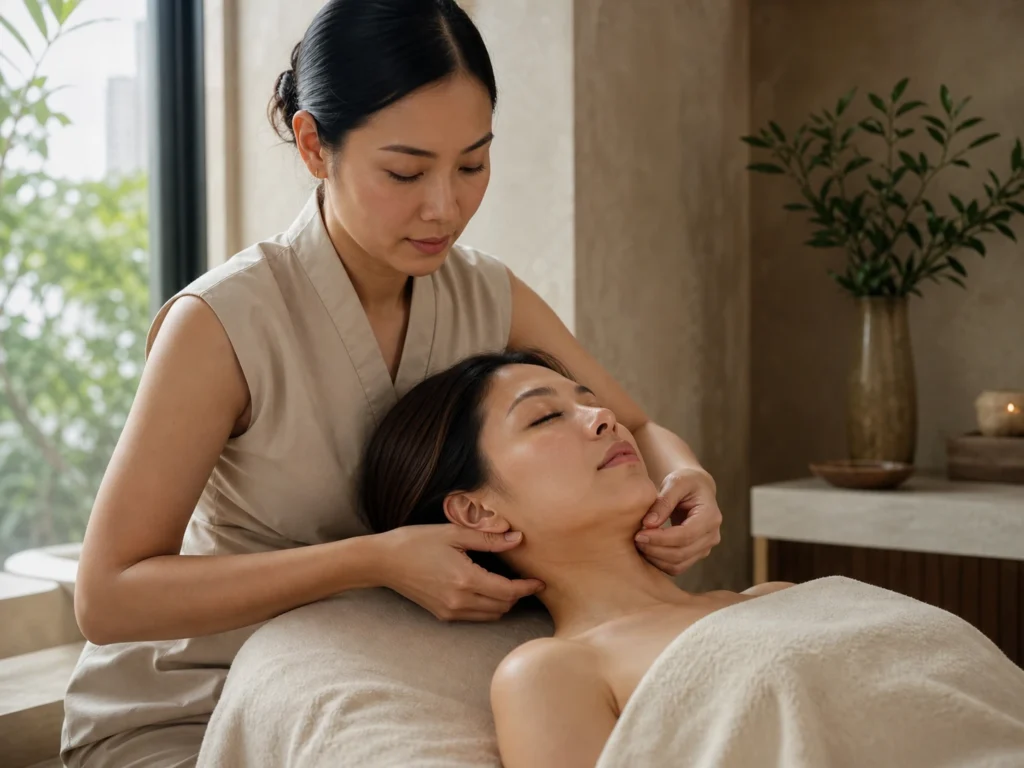
The experience should feel calm and controlled. Sharp pain, strong pulling, bruising or numbness are not signs of a better treatment. Clients should be able to ask for lighter pressure or stop at any time. Studios also need clear hygiene routines, clean hands, fresh linens and properly sanitised reusable tools.
A simple routine for home
Start with clean hands and a comfortable seated position. Let the shoulders drop and take three unforced breaths. Place the fingertips lightly at the temples and make small, slow circles for twenty to thirty seconds. Move to the jaw and use broad, gentle contact rather than pinching. Finish by turning the head slowly from side to side within a comfortable range.
Keep the entire routine to five minutes at first. The skin should never be stretched aggressively, and an exercise should not cause pain. Consistency, comfort and attention matter more than force. A glass of water, a quiet minute and a return to neutral posture make a better ending than adding more repetitions simply to make the routine feel intensive.

When to pause or seek professional advice
Skip the routine over broken, infected, inflamed or severely irritated skin. People who have persistent facial pain, sudden swelling, numbness, unexpected facial weakness, a recent injury or a recent medical or aesthetic procedure should ask an appropriate qualified professional what is safe for them. A wellness practitioner should never diagnose a condition or encourage a client to ignore symptoms.
It is equally important to be realistic about results. A face workout is not a substitute for medical treatment, dental care, sleep or daily sun protection. Research remains limited: a small 2018 pilot study recruited twenty-seven participants, but only sixteen completed its twenty-week programme. Its researchers said larger studies are needed. Any visible effect may be subtle or temporary.
What the trend means for wellness professionals
For therapists and estheticians, face-focused wellness can be a useful specialist skill when it is supported by anatomy knowledge, hygiene, consultation and scope-of-practice boundaries. Employers should assess hands-on technique and communication, not just social-media presentation. Training should include contraindications, informed consent and the confidence to refer a client when a concern falls outside a wellness role.
Professionals exploring this direction can browse current wellness jobs, compare roles with the HiSoLife Wellness Salary Guide and submit a professional profile. Spa and studio operators building a skilled team can also review HiSoLife’s wellness recruitment services.
A modern ritual, approached with care
The most appealing face workouts are not the loudest or most dramatic. They combine skilled touch, comfortable movement, realistic language and a calm setting. In Bangkok, that makes them a natural addition to the city’s wider culture of massage, beauty and restorative wellness.
For clients, the best starting point is simple: choose comfort over intensity, ask questions and treat the routine as a short act of awareness. For professionals, the opportunity lies in delivering a thoughtful experience that respects the client, the skin and the limits of what a wellness service can promise.
Frequently asked questions
How often can I do a face workout?
A short, gentle routine can be tried a few times a week if it feels comfortable and does not irritate the skin. Increase neither pressure nor frequency to chase faster results.
Do I need a special tool?
No. Clean hands, light pressure and good control are enough for a simple routine. Tools are optional and should never be used aggressively or over irritated skin.
Can face workouts replace professional skincare?
No. They are a complementary wellness practice. Persistent skin concerns, pain or unexpected facial symptoms should be assessed by an appropriately qualified professional.