
How to Recruit Massage Therapists for a Premium Spa Team
Recruiting massage therapists is one of the most important decisions a spa, hotel wellness center or massage business can make. The quality of the therapist shapes guest satisfaction, repeat bookings, treatment reviews, team culture and the credibility of the entire wellness offer. A beautiful reception area and a well-designed treatment menu will not compensate for poor technique, weak communication or an unreliable schedule. The therapist is the service. For that reason, recruitment cannot be treated as a simple job ad followed by a quick interview. It needs a structured process that tests skill, attitude, availability and fit.

Many employers use the word masseuse when searching online, but the professional hiring conversation is usually stronger when the role is framed as massage therapist, spa therapist or wellness therapist. These terms help attract candidates who see the work as a skilled profession. They also make the job offer clearer for international candidates, hotels, clinics and premium spa environments where professionalism matters. The goal is not only to find someone who can perform a treatment. The goal is to find a person who can deliver consistent care, respect client boundaries, follow hygiene standards, communicate calmly and grow with the business.
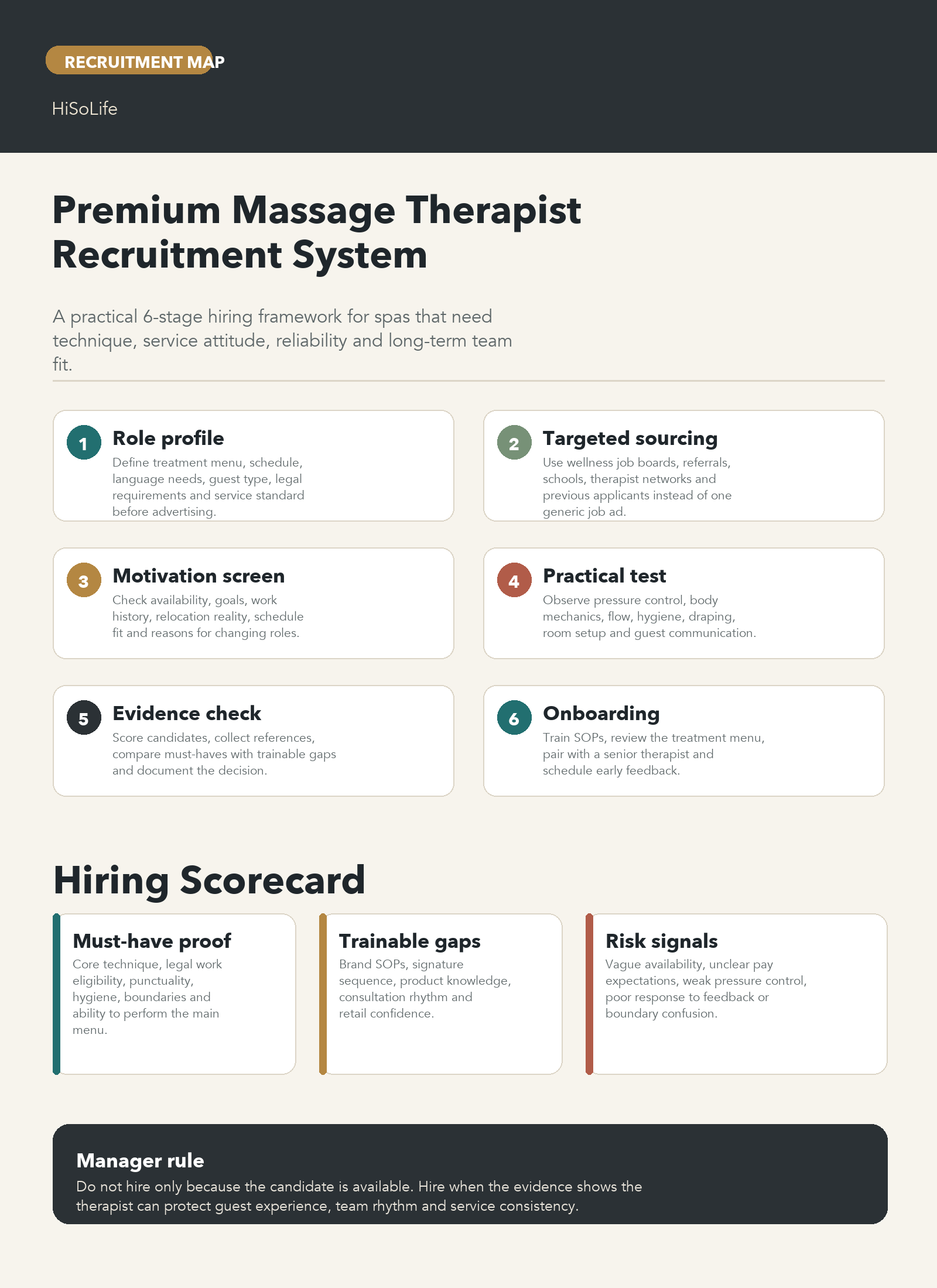
Start With A Clear Therapist Profile
The first mistake in massage therapist recruitment is publishing a vague vacancy. A post that says “massage therapist wanted” may receive applications, but many will not match the business. Before advertising, define the exact profile. Does the spa need traditional Thai massage, deep tissue, aromatherapy, foot reflexology, sports recovery, facial massage support or a therapist who can perform several treatments? Does the role require English communication, hotel experience, retail sales confidence, schedule flexibility or international relocation? The sharper the profile, the easier it becomes to screen candidates quickly.
A clear profile should include required techniques, preferred experience, expected working hours, treatment duration, guest type, team size, language needs, salary structure, commissions, tips policy and training expectations. It should also describe the service standard. A boutique wellness studio may need a warm, conversational therapist who can build personal relationships with repeat clients. A luxury hotel may need a quieter hospitality style, excellent grooming and strong procedure discipline. A high-volume massage center may need stamina, punctuality and teamwork under pressure. Different environments require different strengths.
Write A Job Offer That Attracts Serious Candidates
Massage therapists evaluate employers too. A strong candidate will want to understand the treatment menu, pay conditions, scheduling rules, breaks, room standards, team culture and client expectations before applying. If the job offer hides important details, experienced therapists may assume the role is unstable or poorly managed. Transparency builds trust. It also filters out candidates who are not comfortable with the conditions, which saves time later.
The job offer should be direct and respectful. Include the location, employment type, weekly schedule, basic salary or pay range, commission structure, expected treatment types, benefits, training support and application steps. Avoid exaggerated promises such as “unlimited income” or “easy work.” Serious therapists know the job is physically demanding. They respond better to employers who show that they understand the reality of massage work. If accommodation, visa support or relocation help is available, explain the scope carefully. If it is not available, say so clearly.
Choose The Right Sourcing Channels
The best recruitment channel depends on the type of therapist required. Local spa therapists may be found through wellness job boards, professional Facebook groups, school networks, referrals, local associations and existing hospitality recruitment channels. International Thai massage profiles may require specialist networks, Thai-language job offers and partners who understand therapist communities. A general job board can help with volume, but it may not provide quality if the role requires specific hands-on technique.
Referrals are often powerful in spa recruitment because therapists know other therapists. A simple referral program can encourage reliable staff to recommend candidates who already understand the work culture. However, referrals should not replace screening. A friend of a good therapist is not automatically a good fit. Treat referred candidates with respect, but use the same interview, practical test and reference process. Consistency protects the business and keeps hiring decisions fair.
Screen For Motivation Before Technique
Technique matters, but motivation determines whether a candidate will stay, learn and serve clients consistently. During the first screening call, listen for why the person wants the role. Are they looking for stable long-term work, a new country, better training, a premium environment, a different schedule or simply any available job? None of these answers is automatically wrong, but each carries different implications. A candidate who wants international experience may be motivated but will need clear relocation information. A candidate who wants a calmer workplace may leave quickly if the spa is high volume.
Ask simple questions: What treatments do you perform most often? Which treatments are you strongest in? What type of clients do you enjoy serving? What schedule can you realistically maintain? What made you leave your previous job? What do you want to improve professionally this year? These questions reveal self-awareness. A therapist who can explain strengths, limits and goals is usually easier to train than someone who gives only generic answers.
Use A Practical Massage Test
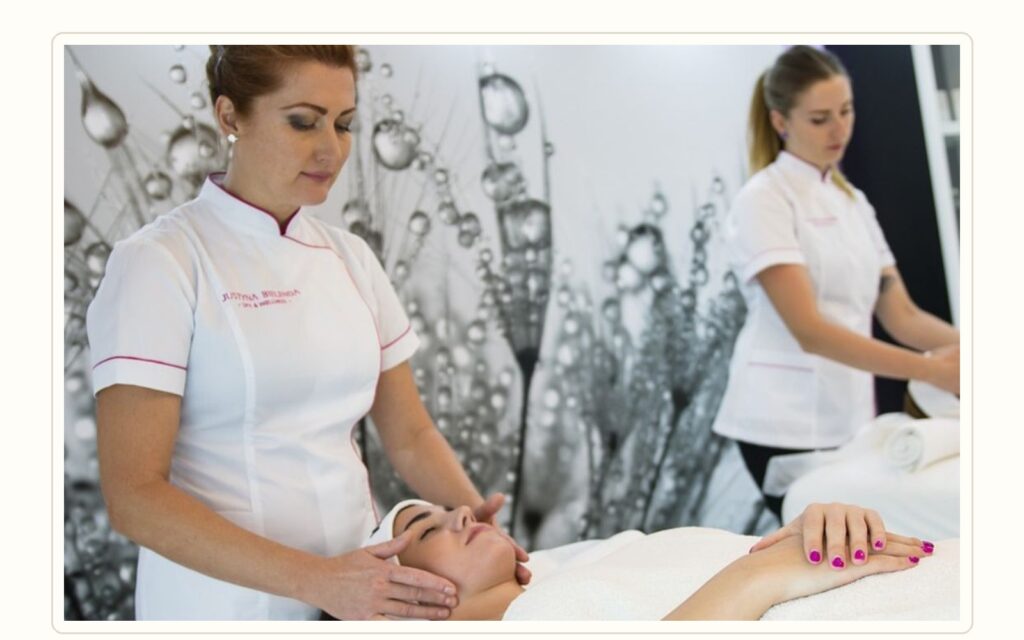
A massage therapist should never be hired on CV alone. The practical test is essential because it shows pressure control, rhythm, body mechanics, client care and professional attitude. A candidate may have years of experience but still apply inconsistent pressure, use poor posture, rush transitions or ignore client feedback. A practical test does not need to be long, but it should be structured. Give the candidate a defined sequence, a realistic treatment time and a clear instruction about the client profile.
The evaluator should observe more than technique. Watch how the therapist prepares the room, washes hands, checks contraindications, greets the model, adjusts draping, asks about pressure and closes the treatment. These small moments reveal whether the candidate understands service. In premium spas, guests judge the complete experience, not only the massage movement. A therapist who is technically strong but careless with hygiene or communication may create operational risk.
Evaluate Communication And Boundaries
Massage is a close-contact service, so communication and boundaries are central to guest safety. A therapist must be able to explain pressure, ask appropriate questions, respond to discomfort and maintain a professional environment. This is especially important for hotels and international wellness businesses where guests may come from many cultural backgrounds. Clear communication reduces misunderstanding and protects both client and therapist.
During the interview, ask how the candidate handles a client who asks for excessive pressure, arrives late, talks throughout the session, complains about pain or makes an inappropriate request. The answer should show calmness, boundaries and escalation judgment. A strong therapist does not argue with clients, but also does not ignore professional standards. If language ability is required, test it in practical context rather than with abstract grammar questions. Can the therapist welcome a guest, explain the treatment and ask about pressure in the working language?
Check Reliability Like A Core Skill
In spa operations, reliability is not a soft bonus. It is a core skill. One absent therapist can disrupt bookings, force refunds, overload colleagues and damage the guest experience. Screening should include availability, commute reality, family obligations, visa status where relevant, health limitations that affect schedule, and willingness to work weekends or evenings. These topics should be handled respectfully and legally, but they cannot be ignored.
Reference checks can be useful when done properly. Instead of asking only whether the candidate was “good,” ask about punctuality, teamwork, guest feedback, pressure consistency, ability to follow procedures and reasons for leaving. Some employers skip references because they want to hire quickly. That speed can become expensive if the candidate leaves after two weeks or damages client trust. A short reference call is often worth the time.
Use A Simple Hiring Scorecard
A hiring scorecard keeps the process fair and practical. List the qualities that matter for the role, then score each candidate after the interview and practical test. Useful criteria include technique match, pressure control, consultation habits, hygiene, communication, punctuality, attitude, language ability, schedule fit and coachability. The scorecard does not need to be complicated. Its purpose is to stop the team from hiring only because someone was charming in conversation or available immediately.
The scorecard also helps managers explain the decision. If one candidate has stronger technique but weaker reliability, and another has slightly less experience but better service thinking, the team can discuss the tradeoff clearly. This is especially helpful when several managers are involved. A written scorecard creates consistency, protects standards and gives the employer a useful record if the same candidate applies again later.
Make Compensation Understandable
Massage therapist pay can include salary, commission, service charge, tips, product commission and overtime. If the structure is confusing, candidates may feel insecure or misled. A clear compensation explanation improves trust and reduces future conflict. Show examples of realistic monthly earnings, not only the maximum possible amount. If tips vary by season or location, explain that. If commission begins only after a target, explain the target in writing.
Premium candidates often choose employers that are organized, not only employers that offer the highest headline number. Fair scheduling, clean rooms, respectful management, steady bookings, professional uniforms, training and reliable payment can matter as much as pay. When recruiting, present the complete employment value: income, working conditions, learning, stability, brand reputation and team culture.
Onboard The Therapist Before The First Client
Recruitment does not end when the candidate accepts. The first week determines whether the therapist understands the brand and feels supported. Onboarding should include treatment menu review, room setup, hygiene protocol, booking flow, consultation form use, contraindication rules, complaint handling, team communication and emergency procedures. If the spa has signature treatments, the therapist should practice them before serving paying guests.
Pairing a new therapist with a senior team member can reduce mistakes. The new hire can observe the service rhythm, learn where supplies are kept and understand the tone expected with guests. Managers should also schedule an early feedback conversation. Ask what is clear, what is confusing and whether the role matches the job offer. Small corrections in the first week prevent larger problems later.
Build A Recruitment Pipeline, Not A Panic Cycle
The worst time to recruit is when the schedule is already collapsing. Spa employers should build a small pipeline before they urgently need staff. Keep records of good candidates, school contacts, referral sources, previous applicants and therapists who may be available later. Maintain relationships with training centers and professional communities. A simple recruitment spreadsheet or applicant tracking system can save days when a vacancy appears.
Pipeline building also means protecting your employer reputation. Therapists talk to each other. If interviews are disorganized, payments are late or managers treat candidates poorly, good profiles may avoid the business. Conversely, a spa known for fairness, clean operations and respectful training will attract better applicants over time. Recruitment quality is partly a reflection of management quality.
Respect Legal And Ethical Hiring Rules
Every employer should adapt the recruitment process to local labor law, licensing rules and employment requirements. Massage work can involve regulated practice, health and safety obligations, immigration rules, insurance conditions and documentation standards depending on the country. A candidate may be excellent, but the business still needs the right legal framework before the person starts work. This is especially important when hiring internationally or offering relocation.
Ethical recruitment also means avoiding misleading promises, unclear deductions, pressure around visas or informal work arrangements that expose the therapist to risk. A transparent process protects both sides. It shows candidates that the business values professional wellness work and wants a stable relationship, not a quick staffing fix. That reputation will help future recruitment.
Conclusion
To recruit massage therapists well, employers need a process that respects both the craft and the business reality. Start with a precise profile, publish a transparent job offer, source from relevant channels, screen for motivation, test practical skill, evaluate communication, verify reliability and onboard with care. The right therapist strengthens the guest experience, supports repeat bookings and gives the spa a more stable foundation. The wrong hire creates stress for clients, colleagues and management.
For premium spa teams, recruitment should be treated as service design. Every hiring choice affects the treatment room. When employers recruit carefully, therapists are more likely to succeed, guests are more likely to return and the business becomes easier to manage. A structured process takes more effort at the beginning, but it saves time, protects standards and creates a stronger wellness team in the long run.
2026 SEO update: How to Recruit Massage Therapists for a Premium Spa Team
Updated for 2026, this guide on How to Recruit Massage Therapists for a Premium Spa Team should be read against a faster-moving wellness market. Recent industry data shows that skills-based hiring is becoming central to quality hiring and talent gap management, while related research notes that tourism businesses continue to face labour shortages, skills gaps and retention pressure. For spa owners, hotel wellness directors and recruitment teams, that means the topic is no longer just an editorial trend; it affects hiring, training, client trust, pricing and how people choose premium wellness experiences in Thailand and beyond. The practical takeaway is to connect the article’s original advice with sharper evidence: define the skill or service clearly, explain how it improves guest outcomes, and make the next step easy through spa and wellness recruitment support, browse qualified wellness candidates and Wellness Salary Guide 2026. Thailand is also receiving more wellness attention, with current tourism and wellness news showing that the global wellness economy reached $6.8 trillion in 2024 and is projected to keep growing toward 2029. A stronger SEO-friendly version of this article therefore needs useful internal links, credible references, and clear answers to the questions readers are likely to search before they apply, hire, book or compare options.
HiSoLife internal update
HiSoLife update: employers can now move from reading about massage therapist recruitment and retention directly into action. Use browse qualified wellness candidates to review talent, post a spa or wellness job to publish a role, and Wellness Salary Guide 2026 to benchmark compensation before making an offer. This internal pathway is important for SEO because it connects informational content with commercial intent: a reader who searched for hiring advice can continue to a relevant employer page instead of leaving the site.
Related HiSoLife resources
- spa and wellness recruitment support
- browse qualified wellness candidates
- post a spa or wellness job
- Wellness Salary Guide 2026
- browse spa and wellness jobs
References and further reading
- LinkedIn, Future of Recruiting 2025 — skills-based hiring is becoming central to quality hiring and talent gap management.
- OECD, strengthening the tourism workforce — tourism businesses continue to face labour shortages, skills gaps and retention pressure.
- Global Wellness Institute, 2025 Global Wellness Economy Monitor — the global wellness economy reached $6.8 trillion in 2024 and is projected to keep growing toward 2029.
- U.S. Bureau of Labor Statistics, Massage Therapists outlook — massage therapist employment is projected to grow 15 percent from 2024 to 2034.
Mini FAQ: How to Recruit Massage Therapists for a Premium Spa Team
What should employers update first for massage therapist recruitment and retention in 2026?
The first update is to turn massage therapist recruitment and retention from a broad idea into a clear decision framework. For this article, that means reading How to Recruit Massage Therapists for a Premium Spa Team as practical guidance for what a reader should do next. The 2026 context matters because wellness is no longer a narrow luxury category: LinkedIn, Future of Recruiting 2025 notes that skills-based hiring is becoming central to quality hiring and talent gap management; OECD, strengthening the tourism workforce notes that tourism businesses continue to face labour shortages, skills gaps and retention pressure. A reader should therefore ask what outcome the topic supports: better hiring, stronger guest retention, safer treatment choices, clearer compensation, or a more credible career path. The SEO-friendly answer is to make that outcome explicit. Instead of saying that wellness is important, the article should explain how this topic affects consultation, service standards, skill proof, job descriptions, client communication and follow-up. On HiSoLife, the next step should also be visible. A candidate can use spa and wellness recruitment support or browse qualified wellness candidates; an employer can move toward post a spa or wellness job; and both sides can use Wellness Salary Guide 2026 to make expectations more concrete.
How can a spa avoid weak hires when recruiting around massage therapist recruitment and retention?
The main risk is treating massage therapist recruitment and retention as a phrase instead of a capability. Search readers usually arrive with a problem: they want to hire someone, get hired, compare a service, understand a skill, or decide whether an experience is worth their time. A weak article answers that problem with generic claims. A stronger article gives criteria. For a spa employer, that may mean checking hands-on technique, consultation language, punctuality, hygiene habits, retail ethics, rebooking behavior and the ability to match a service to a guest’s real needs. For a candidate, it may mean showing certificates, before-and-after case notes where appropriate, training logs, client communication examples and evidence of reliability. Current references support the wider point: LinkedIn, Future of Recruiting 2025 notes that skills-based hiring is becoming central to quality hiring and talent gap management; Global Wellness Institute, 2025 Global Wellness Economy Monitor notes that the global wellness economy reached $6.8 trillion in 2024 and is projected to keep growing toward 2029. HiSoLife can support that decision path with spa and wellness recruitment support, post a spa or wellness job and browse spa and wellness jobs. The practical SEO gain is that the page becomes useful for long-tail searches rather than only repeating the title.
Which skills should be checked before making an offer?
The most important skills depend on the angle of massage therapist recruitment and retention, but the same principle applies across spa, beauty, massage, facial therapy, wellness sales and management: the reader needs proof. Technical knowledge is only one layer. A strong professional also needs consultation skills, client boundaries, product or modality literacy, hygiene discipline, time management and the ability to explain recommendations without pressure. For management and recruitment topics, employers should add structured interviews, practical tests, reference checks and onboarding milestones. For skincare or wellness experience topics, readers should look for credible training, transparent claims and realistic aftercare guidance. This matters in 2026 because OECD, strengthening the tourism workforce notes that tourism businesses continue to face labour shortages, skills gaps and retention pressure, and because LinkedIn, Future of Recruiting 2025 notes that skills-based hiring is becoming central to quality hiring and talent gap management. Inside HiSoLife, the article should guide readers toward concrete pages: spa and wellness recruitment support for opportunity discovery, Wellness Salary Guide 2026 for compensation or expectation checks, and browse spa and wellness jobs for deeper exploration. That internal structure helps users and search engines understand the topic cluster. For search intent, the useful angle is not only the definition of massage therapist recruitment and retention; it is the practical decision a reader needs to make next. A candidate may need to compare roles, update a profile, or understand which training signals credibility. An employer may need to separate a polished CV from a reliable service professional who can protect guest trust over time. That is why this answer connects the topic to measurable actions rather than broad lifestyle language.
How does HiSoLife help employers turn massage therapist recruitment and retention into a shortlist?
HiSoLife helps by connecting the informational part of massage therapist recruitment and retention with the marketplace action that usually follows. A blog article can explain the concept, but the reader often needs somewhere to go next. If the reader is a candidate, the useful path is to review open roles, prepare a stronger resume, compare salary expectations and return to the article’s checklist before applying. If the reader is an employer, the useful path is to define the role, publish the job, compare candidates and keep the article as a standard for interviews or onboarding. The internal links in this refresh are designed for that behavior. They point to pages such as spa and wellness recruitment support, browse qualified wellness candidates, post a spa or wellness job and Wellness Salary Guide 2026 with descriptive anchors rather than vague words like “here” or “learn more.” That is better for SEO and for people. It also keeps older articles useful by connecting them to current site assets, including the salary guide and recruitment pages. References such as LinkedIn, Future of Recruiting 2025 and OECD, strengthening the tourism workforce give the article external context, while the internal pathway gives it commercial relevance. For search intent, the useful angle is not only the definition of massage therapist recruitment and retention; it is the practical decision a reader needs to make next. A candidate may need to compare roles, update a profile, or understand which training signals credibility. An employer may need to separate a polished CV from a reliable service professional who can protect guest trust over time. That is why this answer connects the topic to measurable actions rather than broad lifestyle language.
What metrics show that a massage therapist recruitment and retention strategy is working?
Success should be measured by whether the article helps a reader make a better decision after searching for massage therapist recruitment and retention. For an employer, useful metrics include higher-quality applicants, fewer unsuitable interviews, faster shortlist creation, better retention after onboarding and clearer compensation conversations. For a candidate, useful metrics include profile completeness, applications to better-matched roles, interview readiness and confidence explaining skills. For a wellness or skincare reader, useful metrics include safer expectations, better questions during consultation and a clearer understanding of what evidence supports a treatment or service. The article should therefore avoid exaggerated promises and focus on practical outcomes. It should link to references like LinkedIn, Future of Recruiting 2025 and Global Wellness Institute, 2025 Global Wellness Economy Monitor when discussing market trends, and it should link internally to spa and wellness recruitment support, Wellness Salary Guide 2026 and browse spa and wellness jobs when guiding the next step. That combination is what makes the refresh SEO friendly: it improves topical relevance, adds authority signals, creates descriptive internal links and gives the reader enough depth to stay on the page longer. For search intent, the useful angle is not only the definition of massage therapist recruitment and retention; it is the practical decision a reader needs to make next. A candidate may need to compare roles, update a profile, or understand which training signals credibility. An employer may need to separate a polished CV from a reliable service professional who can protect guest trust over time. That is why this answer connects the topic to measurable actions rather than broad lifestyle language.