How to Provide Excellent Customer Service at Spa and Wellness
Spa and wellness industry is delivering outstanding customer service is not merely a luxury but an essential aspect of the overall experience. This comprehensive guide explores the strategies, techniques, and mindset required to provide excellent customer service in spa and wellness centers, emphasizing the creation of a haven where clients can escape, unwind, and truly feel pampered. We will delve into how exceeding client expectations, establishing a welcoming ambiance, and personalizing services contribute to a foundation of exceptional customer care. Join us on a journey to discover the art of elevating the spa and wellness experience through unparalleled customer service.
Understanding Customer Expectations:
To provide outstanding service, it’s crucial to understand the expectations of spa and wellness clients. Begin by acknowledging that they seek more than just physical rejuvenation; they crave an escape, a sanctuary where they can unwind and feel pampered. Recognizing and exceeding these expectations will set the foundation for exceptional customer service.
Creating a Welcoming Environment:
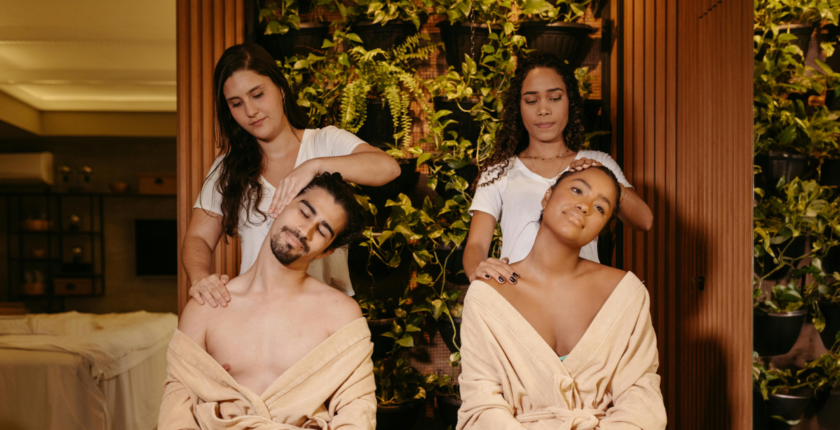
The ambiance of a spa plays a pivotal role in shaping the customer experience. Ensure that the atmosphere is soothing, with calming colors, soft lighting, and tranquil music. Friendly and attentive staff members contribute significantly to creating a warm and welcoming environment, making clients feel valued from the moment they step through the door.
Tailoring Services to Individual Needs:
Every client is unique, and their preferences for treatments and experiences will vary. Train your staff to actively listen to clients, understand their specific needs, and tailor services accordingly. Personalization not only enhances the effectiveness of treatments but also demonstrates a commitment to individualized care.
Effective Communication:
Clear and transparent communication is a cornerstone of excellent customer service. Provide detailed information about treatments, products, and any necessary pre- or post-care instructions. Keep clients informed about wait times and any changes to their scheduled appointments. Open communication builds trust and ensures a positive experience.
Empathy and Understanding:
Empathy is a powerful tool in the spa and wellness industry. Staff members should be trained to empathize with clients’ concerns and preferences. Whether a client is seeking relaxation, pain relief, or beauty enhancements, understanding their goals fosters a deeper connection and enhances the overall customer experience.
Staff Training and Development:
Investing in ongoing training for your spa and wellness staff is key to maintaining a high standard of customer service. Ensure that employees are well-versed in the latest techniques, products, and industry trends. Training should also focus on interpersonal skills, conflict resolution, and the art of creating memorable moments.
Efficient Appointment Management:
A smooth and efficient appointment scheduling system is essential for providing excellent customer service. Implement user-friendly booking platforms, send appointment reminders, and strive to minimize wait times. Streamlining these processes contributes to a stress-free experience for clients, enhancing overall satisfaction.
Seeking and Incorporating Customer Feedback:
Continuous improvement is a hallmark of excellent customer service. Encourage clients to provide feedback on their experiences, whether positive or constructive. Use this valuable information to identify areas for enhancement and refinement, demonstrating a commitment to always evolving and exceeding expectations.
Prioritizing Cleanliness and Hygiene:
Maintaining a clean and hygienic spa environment is non-negotiable. Clients associate cleanliness with professionalism and care. Implement rigorous cleanliness protocols for treatment rooms, equipment, and common areas. A pristine environment not only ensures client safety but also contributes to a positive perception of your spa.
The Power of Personalized Touches:
Consider incorporating personalized touches to make clients feel special. This could include customizing treatment room amenities, remembering individual preferences, or offering post-treatment refreshments. These thoughtful gestures elevate the overall customer experience and foster a sense of loyalty.
Building Strong Client Relationships:
Cultivate lasting relationships with clients by staying connected beyond their spa visits. Implement a customer relationship management (CRM) system to track preferences, send personalized promotions, and express appreciation for their loyalty. Building strong relationships contributes to repeat business and positive word-of-mouth referrals.
Utilizing Technology to Enhance Service:
Incorporate technology to streamline processes and enhance the customer experience. Online booking systems, virtual consultations, and personalized mobile apps can provide convenience and accessibility for clients. Embrace innovations that align with your spa’s brand and clientele.
Handling Customer Concerns with Grace:
No business is immune to occasional customer concerns or complaints. Train your staff to handle such situations with grace and professionalism. Address issues promptly, offer solutions, and use constructive feedback as an opportunity for improvement. Resolving concerns effectively can turn a negative experience into a positive one.
Promoting Wellness Education:
Empower your clients by offering educational resources on wellness and self-care. Provide information on the benefits of different treatments, skincare routines, and healthy lifestyle practices. A well-informed clientele is more likely to appreciate the value of your services and become loyal patrons.
Celebrating Milestones and Special Occasions:
Recognize and celebrate your clients’ milestones and special occasions. Whether it’s a birthday, anniversary, or a personal achievement, acknowledging these moments fosters a sense of connection and shows that your spa values the individual lives of its clients.
Community Engagement and Outreach:
Engage with the local community to broaden your spa’s reach and impact. Sponsor wellness events, collaborate with other businesses, and participate in community activities. Being an active and positive force in the community not only builds brand reputation but also attracts new clients.
Measuring and Analyzing Customer Satisfaction:
Implement surveys and analytics tools to measure customer satisfaction and gather insights. Regularly assess feedback to identify trends and areas for improvement. Data-driven decisions will help you refine your services and maintain a high level of customer satisfaction.
Adapting to Changing Trends:
Stay abreast of industry trends and evolving customer preferences. Embrace new technologies, incorporate emerging treatments, and adapt your services to meet the evolving needs of your clientele. A forward-thinking approach ensures that your spa remains relevant and competitive.
In the world of spa and wellness, customer service is not just a transaction—it’s an art. By prioritizing the holistic well-being of your clients, creating a welcoming environment, and continuously refining your services, you can elevate the customer experience to new heights. As your spa becomes synonymous with excellence, client satisfaction and loyalty will naturally follow, establishing your establishment as a haven of relaxation and rejuvenation.
2026 SEO update: How to Provide Excellent Customer Service at Spa and Wellness
Updated for 2026, this guide on How to Provide Excellent Customer Service at Spa and Wellness should be read against a faster-moving wellness market. Recent industry data shows that skills-based hiring is becoming central to quality hiring and talent gap management, while related research notes that tourism businesses continue to face labour shortages, skills gaps and retention pressure. For spa owners, hotel wellness directors and recruitment teams, that means the topic is no longer just an editorial trend; it affects hiring, training, client trust, pricing and how people choose premium wellness experiences in Thailand and beyond. The practical takeaway is to connect the article’s original advice with sharper evidence: define the skill or service clearly, explain how it improves guest outcomes, and make the next step easy through spa and wellness recruitment support, browse qualified wellness candidates and Wellness Salary Guide 2026. Thailand is also receiving more wellness attention, with current tourism and wellness news showing that the global wellness economy reached $6.8 trillion in 2024 and is projected to keep growing toward 2029. A stronger SEO-friendly version of this article therefore needs useful internal links, credible references, and clear answers to the questions readers are likely to search before they apply, hire, book or compare options.
HiSoLife internal update
HiSoLife update: employers can now move from reading about spa recruitment and workforce planning directly into action. Use browse qualified wellness candidates to review talent, post a spa or wellness job to publish a role, and Wellness Salary Guide 2026 to benchmark compensation before making an offer. This internal pathway is important for SEO because it connects informational content with commercial intent: a reader who searched for hiring advice can continue to a relevant employer page instead of leaving the site.
Related HiSoLife resources
- spa and wellness recruitment support
- browse qualified wellness candidates
- post a spa or wellness job
- Wellness Salary Guide 2026
- browse spa and wellness jobs
References and further reading
- LinkedIn, Future of Recruiting 2025 — skills-based hiring is becoming central to quality hiring and talent gap management.
- OECD, strengthening the tourism workforce — tourism businesses continue to face labour shortages, skills gaps and retention pressure.
- Global Wellness Institute, 2025 Global Wellness Economy Monitor — the global wellness economy reached $6.8 trillion in 2024 and is projected to keep growing toward 2029.
- U.S. Bureau of Labor Statistics, Massage Therapists outlook — massage therapist employment is projected to grow 15 percent from 2024 to 2034.
Mini FAQ: How to Provide Excellent Customer Service at Spa and Wellness
What should employers update first for spa recruitment and workforce planning in 2026?
The first update is to turn spa recruitment and workforce planning from a broad idea into a clear decision framework. For this article, that means reading How to Provide Excellent Customer Service at Spa and Wellness as practical guidance for what a reader should do next. The 2026 context matters because wellness is no longer a narrow luxury category: LinkedIn, Future of Recruiting 2025 notes that skills-based hiring is becoming central to quality hiring and talent gap management; OECD, strengthening the tourism workforce notes that tourism businesses continue to face labour shortages, skills gaps and retention pressure. A reader should therefore ask what outcome the topic supports: better hiring, stronger guest retention, safer treatment choices, clearer compensation, or a more credible career path. The SEO-friendly answer is to make that outcome explicit. Instead of saying that wellness is important, the article should explain how this topic affects consultation, service standards, skill proof, job descriptions, client communication and follow-up. On HiSoLife, the next step should also be visible. A candidate can use spa and wellness recruitment support or browse qualified wellness candidates; an employer can move toward post a spa or wellness job; and both sides can use Wellness Salary Guide 2026 to make expectations more concrete.
How can a spa avoid weak hires when recruiting around spa recruitment and workforce planning?
The main risk is treating spa recruitment and workforce planning as a phrase instead of a capability. Search readers usually arrive with a problem: they want to hire someone, get hired, compare a service, understand a skill, or decide whether an experience is worth their time. A weak article answers that problem with generic claims. A stronger article gives criteria. For a spa employer, that may mean checking hands-on technique, consultation language, punctuality, hygiene habits, retail ethics, rebooking behavior and the ability to match a service to a guest’s real needs. For a candidate, it may mean showing certificates, before-and-after case notes where appropriate, training logs, client communication examples and evidence of reliability. Current references support the wider point: LinkedIn, Future of Recruiting 2025 notes that skills-based hiring is becoming central to quality hiring and talent gap management; Global Wellness Institute, 2025 Global Wellness Economy Monitor notes that the global wellness economy reached $6.8 trillion in 2024 and is projected to keep growing toward 2029. HiSoLife can support that decision path with spa and wellness recruitment support, post a spa or wellness job and browse spa and wellness jobs. The practical SEO gain is that the page becomes useful for long-tail searches rather than only repeating the title.
Which skills should be checked before making an offer?
The most important skills depend on the angle of spa recruitment and workforce planning, but the same principle applies across spa, beauty, massage, facial therapy, wellness sales and management: the reader needs proof. Technical knowledge is only one layer. A strong professional also needs consultation skills, client boundaries, product or modality literacy, hygiene discipline, time management and the ability to explain recommendations without pressure. For management and recruitment topics, employers should add structured interviews, practical tests, reference checks and onboarding milestones. For skincare or wellness experience topics, readers should look for credible training, transparent claims and realistic aftercare guidance. This matters in 2026 because OECD, strengthening the tourism workforce notes that tourism businesses continue to face labour shortages, skills gaps and retention pressure, and because LinkedIn, Future of Recruiting 2025 notes that skills-based hiring is becoming central to quality hiring and talent gap management. Inside HiSoLife, the article should guide readers toward concrete pages: spa and wellness recruitment support for opportunity discovery, Wellness Salary Guide 2026 for compensation or expectation checks, and browse spa and wellness jobs for deeper exploration. That internal structure helps users and search engines understand the topic cluster. For search intent, the useful angle is not only the definition of spa recruitment and workforce planning; it is the practical decision a reader needs to make next. A candidate may need to compare roles, update a profile, or understand which training signals credibility. An employer may need to separate a polished CV from a reliable service professional who can protect guest trust over time. That is why this answer connects the topic to measurable actions rather than broad lifestyle language.
How does HiSoLife help employers turn spa recruitment and workforce planning into a shortlist?
HiSoLife helps by connecting the informational part of spa recruitment and workforce planning with the marketplace action that usually follows. A blog article can explain the concept, but the reader often needs somewhere to go next. If the reader is a candidate, the useful path is to review open roles, prepare a stronger resume, compare salary expectations and return to the article’s checklist before applying. If the reader is an employer, the useful path is to define the role, publish the job, compare candidates and keep the article as a standard for interviews or onboarding. The internal links in this refresh are designed for that behavior. They point to pages such as spa and wellness recruitment support, browse qualified wellness candidates, post a spa or wellness job and Wellness Salary Guide 2026 with descriptive anchors rather than vague words like “here” or “learn more.” That is better for SEO and for people. It also keeps older articles useful by connecting them to current site assets, including the salary guide and recruitment pages. References such as LinkedIn, Future of Recruiting 2025 and OECD, strengthening the tourism workforce give the article external context, while the internal pathway gives it commercial relevance. For search intent, the useful angle is not only the definition of spa recruitment and workforce planning; it is the practical decision a reader needs to make next. A candidate may need to compare roles, update a profile, or understand which training signals credibility. An employer may need to separate a polished CV from a reliable service professional who can protect guest trust over time. That is why this answer connects the topic to measurable actions rather than broad lifestyle language.
What metrics show that a spa recruitment and workforce planning strategy is working?
Success should be measured by whether the article helps a reader make a better decision after searching for spa recruitment and workforce planning. For an employer, useful metrics include higher-quality applicants, fewer unsuitable interviews, faster shortlist creation, better retention after onboarding and clearer compensation conversations. For a candidate, useful metrics include profile completeness, applications to better-matched roles, interview readiness and confidence explaining skills. For a wellness or skincare reader, useful metrics include safer expectations, better questions during consultation and a clearer understanding of what evidence supports a treatment or service. The article should therefore avoid exaggerated promises and focus on practical outcomes. It should link to references like LinkedIn, Future of Recruiting 2025 and Global Wellness Institute, 2025 Global Wellness Economy Monitor when discussing market trends, and it should link internally to spa and wellness recruitment support, Wellness Salary Guide 2026 and browse spa and wellness jobs when guiding the next step. That combination is what makes the refresh SEO friendly: it improves topical relevance, adds authority signals, creates descriptive internal links and gives the reader enough depth to stay on the page longer. For search intent, the useful angle is not only the definition of spa recruitment and workforce planning; it is the practical decision a reader needs to make next. A candidate may need to compare roles, update a profile, or understand which training signals credibility. An employer may need to separate a polished CV from a reliable service professional who can protect guest trust over time. That is why this answer connects the topic to measurable actions rather than broad lifestyle language.